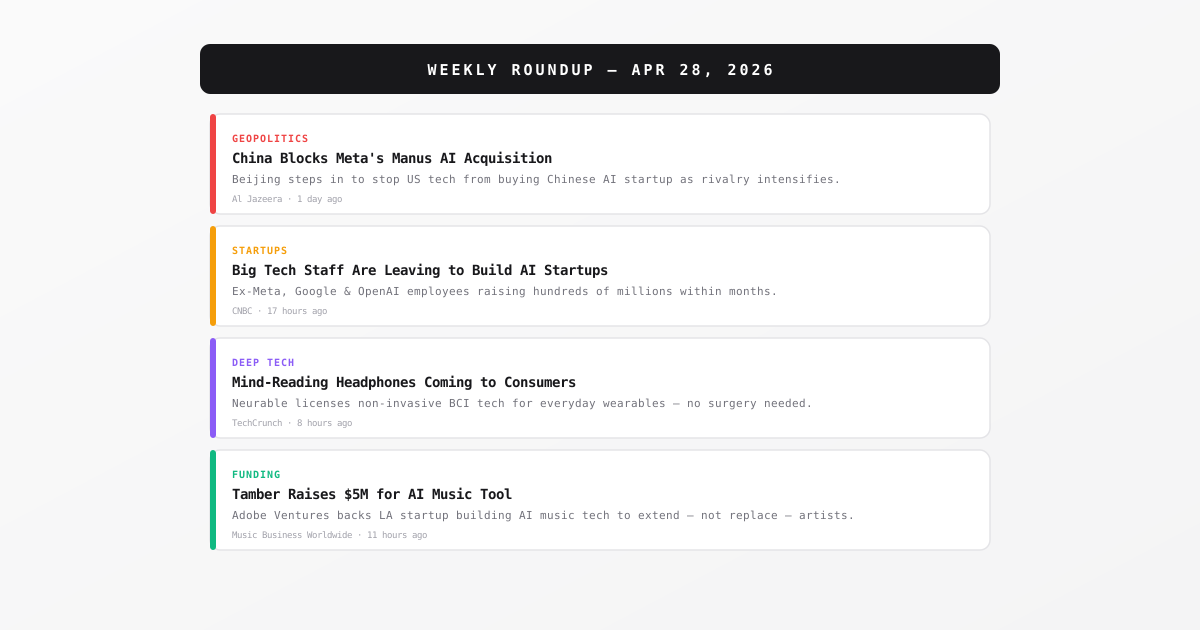
This Week in Tech
Four stories worth knowing about — explained simply.
🌐 China Blocks Meta from Buying AI Startup Manus
What happened: Meta tried to acquire Manus, a Chinese AI startup that builds autonomous AI agents — basically software that can take actions on your behalf without you having to do each step manually. China stepped in and blocked the deal.
Why it matters: This is rare. A foreign government blocking an American tech giant from buying a startup signals how seriously China is treating AI as a national asset. It's not just a business deal anymore — it's geopolitics.
The simple version: Imagine Apple trying to buy a Chinese app company, and the Chinese government saying no. That's what just happened, except it's AI, and the stakes are higher. Expect more of this as the US-China AI rivalry heats up.
🚀 Top Engineers Are Leaving Google, Meta, and OpenAI to Start Their Own AI Companies
What happened: A wave of senior engineers and researchers from the biggest AI companies — Meta, Google, OpenAI — are quitting to launch startups. Some are raising hundreds of millions of dollars within months of leaving.
Why it matters: When the people who built the leading AI models decide to go start something new, it tells you two things: (1) there's still a huge amount of opportunity they think isn't being captured by the big players, and (2) investors agree — they're writing massive checks to people who have barely launched yet.
The simple version: The people with the most insider knowledge of AI are betting their careers that the next big thing hasn't been built yet. That's a meaningful signal.
🧠 A Startup Wants to Put Mind-Reading Tech in Your Headphones
What happened: Neurable, a BCI (brain-computer interface) startup, announced it's licensing its non-invasive neural data technology for use in consumer wearables — think headphones that can read your brain signals.
Why it matters: Brain-computer interfaces have mostly lived in labs or required surgery. Neurable is betting that you can get useful neural data just by wearing something on your head. Their current pitch: headphones that track your focus and attention levels in real time.
The simple version: Your headphones might soon know when you're zoning out before you do. That sounds wild, but the applications — for studying, for productivity, for accessibility — are real.
🎵 Adobe Ventures Backs $5M AI Music Startup Tamber
What happened: Tamber, an LA-based music tech startup, raised $5 million led by Adobe Ventures and Rackhouse Ventures. Their tool uses AI to help musicians and creators work with music — with a specific focus on assisting human artists, not replacing them.
Why it matters: The "AI replacing artists" debate has been loud and messy. Tamber is explicitly positioning itself on the other side — AI as a collaborator. Adobe backing them is interesting because Adobe has been making similar bets across creative tools (Photoshop, Premiere).
The simple version: A startup just raised $5M to build AI music tools that make artists better, not obsolete. The "AI vs. creativity" conversation is shifting from fear to figuring out what the collaboration actually looks like.
One Thing to Watch
The thread connecting all four stories this week: AI is no longer just a product category — it's infrastructure for power. Governments are blocking deals over it. The best engineers are betting their careers on it. It's showing up in your headphones and your music. The next few years will define who controls it, who builds on it, and who gets left out.