What Just Happened
OpenAI released GPT-5, and the headline feature isn't just that it's smarter. It's that it does everything in one place.
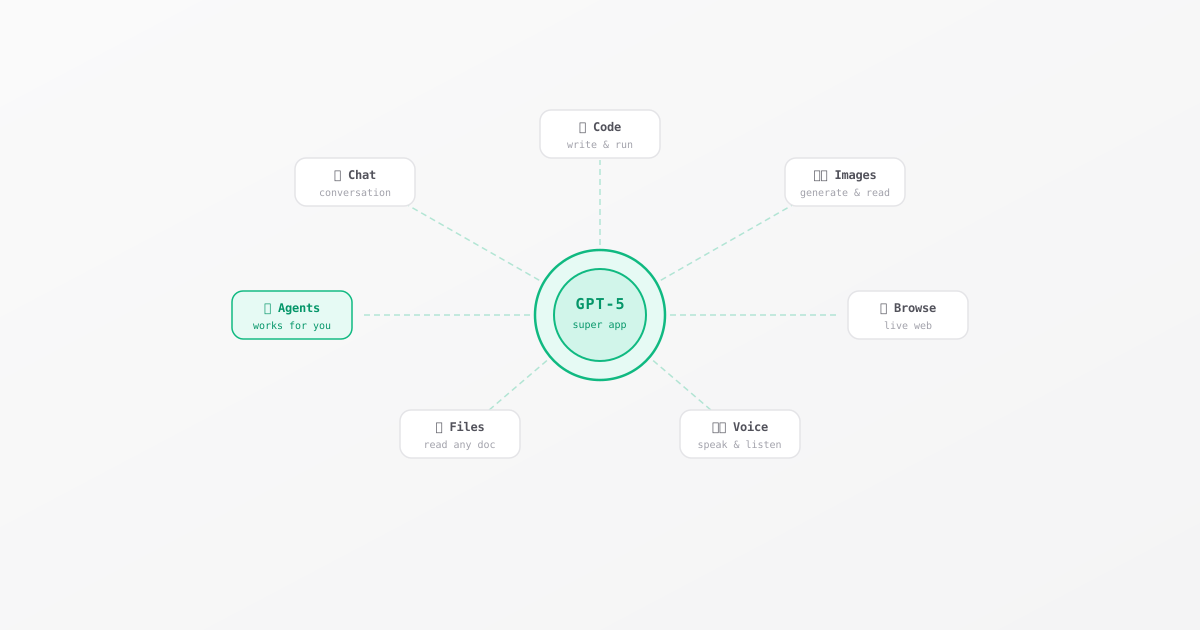
Previously, if you wanted to use ChatGPT for different tasks, you were piecing things together — a plugin here, a different model there, switching between tools constantly. GPT-5 changes that. Text, images, code, web browsing, voice — one model, one interface.
That's what people mean when they call it a super app: it's not just a better chatbot, it's an attempt to become the single AI layer for your entire workflow.
What GPT-5 Can Actually Do
Here's what's new and actually useful:
Unified everything. You can paste an image, ask a follow-up in text, have it write code based on what it sees, run that code, and browse the web to verify a result — all in one conversation. No switching tools.
Better reasoning. GPT-5 is noticeably more careful about saying "I don't know." Earlier models would confidently state wrong things. GPT-5 is more likely to flag uncertainty or check its work — which matters a lot if you're using it for anything important.
Workspace agents. For students and teams using ChatGPT's business or education tiers, GPT-5 now powers agents that work across Slack, Gmail, and other tools — automatically — without you having to trigger each step manually.
The "Super App" Play
The phrase "super app" comes from Asia, where apps like WeChat do everything: messaging, payments, shopping, booking rides, calling a doctor. One app, one login, your whole life.
OpenAI is clearly trying to build the AI version of that. Instead of:
- ChatGPT for chatting
- GitHub Copilot for code
- Midjourney for images
- Perplexity for search
The pitch is: just use GPT-5.
Whether that's good or bad depends on how much you like having one company handling everything — a debate that's very much alive right now.
What This Means for You as a Student
The bar for using AI is dropping. You don't need to know which tool to use for which task anymore. You describe what you want and GPT-5 figures out how to get there.
The skill that's becoming valuable isn't using AI — it's directing it well. Anyone can type a prompt. The people who get real leverage are the ones who know how to ask clearly, check the output critically, and catch the mistakes before they matter.
Free users still get less. The most powerful GPT-5 features are paywalled. If you're on the free tier, you'll notice the difference. Worth knowing so you're not confused when your friend's output looks way better than yours.
One Thing to Watch
OpenAI isn't the only one doing this. Google's Gemini, Anthropic's Claude, and Meta's Llama are all racing toward the same "do everything" model. The next 12 months will be the most competitive period in AI history — which is great for users, because these companies will keep trying to outdo each other on capability and price.